Metadata in the Age of AI Inference
Reclaiming agency in the digital panopticon
Bathang


Internet traffic metadata might seem innocuous. Who cares how many messages you sent or what time you clicked a link? If your name isn’t attached and the content is encrypted anyway, does it matter if a few details about your online activities leak?
But encryption only shields traffic content: your credit card details, your group chat messages, your passwords. It’s the information travelling the network alongside your content – who chatted to whom, when, and for how long – that tells the most revealing stories.
Artificial intelligence has supercharged metadata analysis, rapidly detecting established patterns and surfacing those overlooked by human analysts. From these patterns, observers can infer more than past actions; they can predict likely future behaviours and ever-more intimate personality traits. Meanwhile, metadata streams are increasingly consolidated across organisations and government agencies, enabling onlookers to draw far more detailed conclusions than would be possible from a single dataset. This is occurring while massive investments are pouring into the AI sector, particularly targeting companies like Palantir Technologies, which has long been associated with metadata collection and analysis.
Worryingly, the inferences made from metadata analysis rely heavily on assumptions derived from patterns of interaction, timing, and movement, frequently without direct human involvement. This can not only lead to dangerous false-positive assumptions about individuals but also brings consent into question, as opaque systems aggregating and analysing metadata erode the conditions under which meaningful permission can exist at all.
What does this mean for our freedoms? Are we drifting toward an automated surveillance state? And if so, where, if anywhere, can we still exercise agency?
Metadata is inevitable
Metadata is a technical byproduct of digital communication: its structure. Every message, request, and connection generates it, whether or not the content relayed is ever seen. It tells devices on a network where to send information, which route will deliver it most efficiently, and how traffic should be prioritised, logged, and managed.
Metadata falls into a small number of categories, each capturing a different aspect of user behaviour:
- Relational metadata (who): information that networks use to identify who’s communicating with whom. Includes source and destination IP addresses, port numbers, domain names, and protocol identifiers. Exposed by design.
- Temporal metadata (when): information that records the timing and duration of network activity. Includes timestamps, session start and end times, message frequency, and connection intervals. Generated automatically for coordination, logging, and reliability.
- Spatial metadata (where): information that indicates where a connection originates or terminates. Includes IP address allocation, mobile phone tower identifiers, network routing paths, and coarse geolocation derived from them. Required for delivery, optimisation, and compliance.
Because metadata isn’t content, which is now largely encrypted before it leaves a device, it is often assumed to be harmless. And in isolation, it usually is. A single piece of metadata rarely says much on its own.
The accumulation of metadata is different. One website visit reveals almost nothing; thousands reveal routines. A single message timestamp is meaningless; months of timestamps hint toward sleep patterns, work habits, relationships, religious preferences, social attitudes, and more. Aggregated across time and services, metadata can imply remarkably detailed activity.
Research across different forms of metadata shows that seemingly sparse records can be densely interconnected and highly revealing. A 2016 study found that real-world telephone metadata was often re-identifiable and capable of exposing sensitive social relationships even without access to content or explicit identifiers.
Separately, a 2013 large-scale analysis of mobile phone mobility data demonstrated that just a handful of coarse spatio-temporal points were sufficient to uniquely distinguish the vast majority of individuals in a dataset. Together, these findings suggest that treating metadata as inherently less sensitive than content reflects a gross misunderstanding of how powerful the former can be.
Scattered data points build mosaics


This dynamic is sometimes described as the mosaic effect: individual data points may appear trivial in isolation, but reveal far more when assembled together.
Consider an ordinary smartphone connected to the internet. Over time, an observer with access to network metadata tracks patterns of activity: when the device connects, how long sessions last, and which services are contacted. On their own, these records remain abstract.
Now add a few equally routine metadata streams. DNS queries reveal which categories of services are contacted at different times of day. When activity can be consistently linked to the same device or account, network transitions can indicate movement between home Wi-Fi, mobile data, and other fixed networks. Connection durations suggest whether services are actively used or briefly checked.
When combined, these signals begin to align. Morning activity coincides with a narrow set of work-related services and long, uninterrupted sessions at a specific location. Evenings show shorter bursts of communication, entertainment, and social platforms at a different location. Late-night activity appears sporadically, but clusters around particular days. Weekends follow a different rhythm entirely.
Without accessing a single message or page view, this mosaic begins to hint at working hours, social availability, sleep patterns, periods of stress or absence, and the rough boundaries between professional and personal life.
Researchers from Rutgers University have demonstrated how analysis of data that many would consider trivial can reveal much more than just a person’s daily routine. By observing mobile phone call log metadata alone over a ten-week period, they were able to infer a person’s attitudes towards privacy.
Privacy-conscious individuals tended to have fewer interactions, engage in deeper communication with a smaller group of contacts, and interact less frequently with unknown or weak contacts. Crucially, their results were often more accurate than traditional, self-reported personality assessments.
AI and fully automated mosaic assembly
The above examples could realistically be inferred by a human observer: someone comparing records, noticing patterns, and drawing conclusions. In practice, that role is increasingly played by automated systems today.
Artificial intelligence is particularly well-suited to analysing metadata because of its structure. Metadata is regular, machine-readable, and produced continuously as a side effect of digital activity. Unlike content, it doesn’t need interpretation. Unlike raw sensor data, which must be contextualised first, it already encodes relationships. These characteristics make it an ideal input for modern machine-learning models.
Recent research into foundation models trained on network traffic illustrates this trend. Systematic reviews of more than 50 studies document rapidly expanding efforts to pretrain AI architectures directly on traffic data and adapt them to a wide range of network tasks, underscoring that metadata-centric AI modelling is an active research frontier.
This research momentum is matched by substantial financial investment. Market projections indicate that the global AI-powered ETL (extract, transform, load) market, which underpins large-scale data integration and preparation for analytics, is expected to grow from approximately $6.7 billion in 2026 to around $20.1 billion by 2032, representing a compound annual growth rate of roughly 13%.
At a broader level, the global artificial intelligence market is projected to expand from about $279 billion in 2026 to more than $1.8 trillion by 2030, signalling that vast and sustained capital is being directed not only toward AI models themselves, but toward the data infrastructure required to feed, train, and operationalise them at scale.
Behavioural signatures, learned statistically, are compared and expanded over time. Rather than answering explicit questions, these systems learn baselines. By modelling typical behaviour for a device, an account, or a population, deviations become automatically visible. A shift in timing, a new pattern of interaction, or a gradual change in behaviour can be detected without anyone having to specify in advance what counts as noteworthy.
This enables forms of analysis that humans struggle to perform at scale. Automated systems can track thousands of overlapping patterns at once, notice slow or subtle changes rather than dramatic events, and correlate weak signals across datasets that were never designed to be analysed together. They treat absence as a signal, identify emerging regularities, and update their assessments continuously as new data arrives.
This capability is no longer confined to the pre-Snowden era’s mass data harvesting by intelligence agencies. Large volumes of metadata are routinely collected and retained by online services, network operators, application developers, advertisers, and infrastructure providers, often for operational or commercial reasons. Governments with surveillance ambitions can and do routinely access these data sets via court orders. In the second half of 2023, for example, the US government requested data from Meta on nearly 160,000 users under Section 702 of the Foreign Intelligence Surveillance Act.
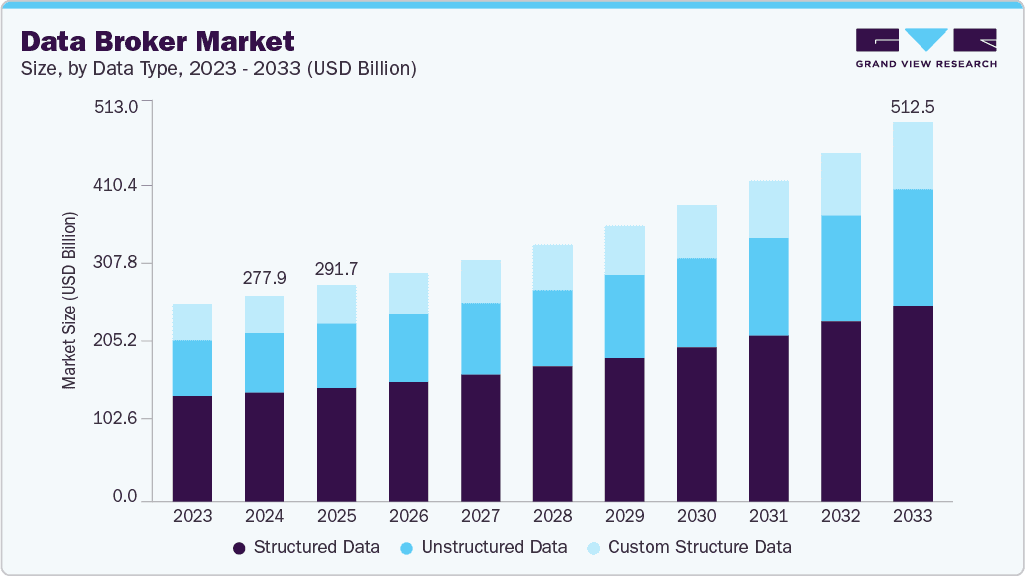
The industrial-scale global data broker market, which monetises structured consumer data including behavioural metadata, was valued at nearly $278 billion in 2024 and is projected to grow substantially, illustrating the scale of commercial data collection. The tools required to process this data – to identify clustering, anomalies, correlations – are widely available.
Research shows that modern AI technologies are regularly integrated into metadata management workflows, automating tasks from classification to governance and demonstrating how accessible such systems have become.

One of the most prominent companies operating at the intersection of large-scale data integration, artificial intelligence, and government surveillance is Palantir Technologies. Founded with a focus on intelligence and defence applications, Palantir builds platforms designed to ingest, link, and analyse vast volumes of structured and unstructured data across organisations. Its software is explicitly marketed around uncovering hidden patterns, relationships, and anomalies within complex datasets, capabilities that closely mirror the forms of automated inference and behavioural modelling described above.
Palantir’s government contracts illustrate how private companies are operationalising continuous data integration and automated inference. In the fourth quarter of 2025, Palantir reported that revenue from US government customers rose by approximately 66% year-over-year to about $570 million, helping drive total quarterly sales of $1.41 billion. Earlier in 2025, Palantir’s US government sales had climbed roughly 53% to about $426 million, representing over 42% of its revenue in that quarter and underscoring how deeply embedded AI data analytics platforms are becoming in federal operations.
A digital panopticon of continuous predictive inference


Much of the public debate about surveillance assumes active observation, i.e., someone deciding to look at a specific data set. But systems built on continuous inference, especially those augmented by AI, don’t operate like that. There is often no single moment of observation, no explicit decision to analyse, and no clear line between ordinary operation and scrutiny.
This shift toward pervasive automated analysis is reinforced by official policy. In March 2025, the White House issued an executive order directing federal agencies to break down “information silos” and ensure that unclassified records, data, software systems, and IT infrastructure are shareable across agencies. The order specifically instructs agency heads to authorise both intra- and inter-agency data sharing as a matter of policy.
Metadata is generated by participation in everyday life: communicating, navigating, working, socialising. Its subsequent analysis is downstream, automated, and frequently opaque. Behaviour is modelled as a matter of course. Once data flows freely across institutional boundaries and into advanced analytics environments, the possibility of continuous predictive inference – detached from any specific suspicion – becomes structurally embedded.
While humans can deliberately fake or curate their behaviour in surveys or superficial interactions, the metadata they generate often reveals deeper, consistent patterns that resist simple manipulation. Research shows that metadata can identify individuals with high accuracy even when efforts are made to obfuscate identity, and behavioural trace data often reveals genuine usage dynamics that humans themselves fail to conceal. AI and machine learning systems leverage these metadata signals, inferring attributes more reliably than humans can hide them.
But the fact that such analysis relies heavily on inference complicates accountability. A stored record can be inspected, corrected, or challenged. A probabilistic assessment – a classification, a risk score, a behavioural prediction – is harder to discover and more difficult to contest. It may never be shown to the person it describes, even as it quietly shapes decisions made about them.
Equally concerning is the fact that automated inference systems inevitably produce false positives, where benign behaviour is incorrectly flagged as noteworthy or risky. In large-scale surveillance contexts, this can result in ordinary individuals being misclassified, subjected to unnecessary scrutiny, or having their profiles altered based on incorrect inferences by opaquely operating AI tools.
The potentially devastating consequences this can have for those wrongly identified raise questions about consent, transparency, accountability, and ultimately, our freedom.
Agency through obfuscation
Constraining freedom doesn’t require force. Freedom is constrained just as effectively by what people believe might be inferred, remembered, or used against them. When communication is persistently observed, logged, and modelled, behaviour changes even in the absence of direct intervention. People speak less freely, associate more cautiously, and avoid actions that might later be misinterpreted by observers.
Often referred to as the “chilling” effect of surveillance, the phenomenon doesn’t require actually monitoring people. Awareness of surveillance alone is enough to make people less likely to search for politically sensitive information, less willing to express dissenting views, and more cautious in their associations.
As documented in a 2016 study, Snowden’s 2013 disclosures led to a sharp decline in traffic to privacy-related Wikipedia articles. Furthermore, traffic did not fully recover, indicating both immediate and lasting behavioural changes stemming from perceptions of being monitored.
Individuals exposed to cues of monitoring are also less likely to search for politically sensitive information, less willing to express dissenting views, and more cautious in their associations. Importantly, these effects appear even when no direct punishment follows: the mere possibility of observation is enough to change how people speak, search, and connect.
And it’s clear that the wider public is not only aware that their data is being harvested and analysed, but a majority are actively concerned about how much of their personal information is out there. Thus, it is fair to conclude that our online public spaces are already radically self-censored and constrained environments, rather than the open, expressive spaces they were in the internet’s early days.
This dynamic persists even when systems are well-intentioned. A risk score, a behavioural classification, or a predictive model doesn’t need to be punitive to shape behaviour. The knowledge that actions contribute to an accumulating profile that may be queried, correlated, or reinterpreted in the future by all manner of entities is enough to encourage self-monitoring. Freedom erodes because inference is persistent.
If individual agency is to be preserved under these conditions, it must be supported by technical constraints that reduce what can be reliably inferred in the first place, i.e., obfuscation.
By deliberately disrupting the regularity, linkability, and predictability of network traffic metadata, obfuscation undermines the assumptions on which large-scale surveillance and behavioural inference depend.
When communication patterns are padded, mixed, delayed, or otherwise rendered ambiguous, metadata loses its narrative coherence. Profiles become noisier, correlations weaken, and automated models struggle to distinguish real data points amongst the background noise.
This is the direction explored by the Logos technology stack. Beyond strong content encryption, Logos’s messaging components address the structural vulnerabilities of communications by obscuring the metadata patterns that enable downstream inference.
Making traffic analysis unreliable by design protects our freedoms to communicate and organise: essential activities for the thriving civil society Logos envisions.
Metadata is inevitable. The challenge is not to make it disappear, but to build communication systems in which metadata no longer provides a dependable foundation for analysis and surveillance. In doing so, we can reclaim our agency and escape the digital panopticon.
Logos is an open-source movement aiming to revitalise civil society. We need coders, writers, designers, and all forward thinkers to join us. To get involved, head to the Logos Contribute portal and submit a proposal.
Discussion
Jarrad Hope
Dr. Corey Petty
Bitzu
Sev Bonnet
Bathang
Bathang
Bathang