Surveillance and Behaviour: The Impact of Being Watched
Surveillance isn't about protecting us from "bad guys"; it quietly reshapes how we think, speak, and act
Bathang

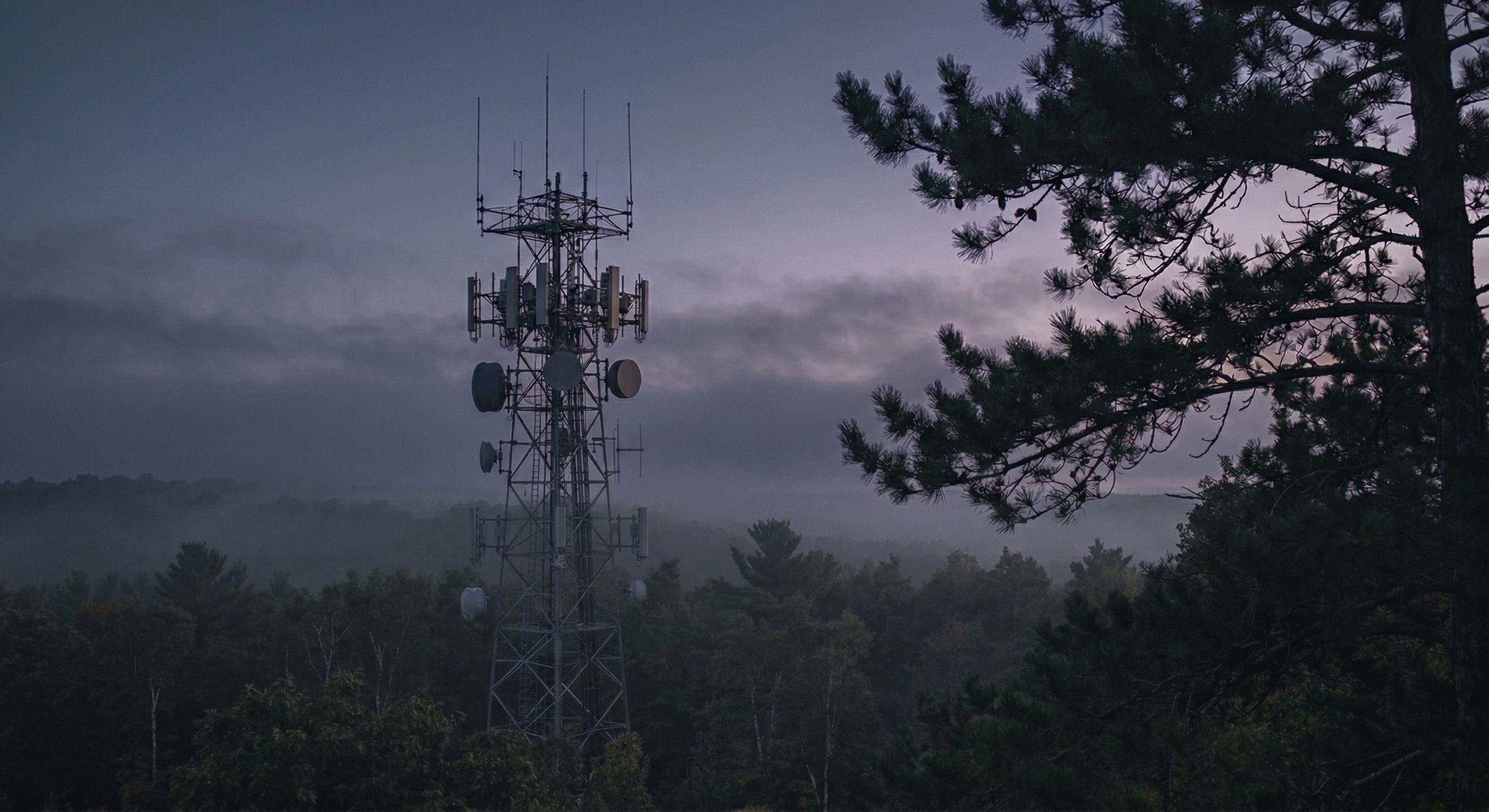
They tell you surveillance is for the safety of you and your family; that if you've nothing to hide, you've nothing to fear.
But is that true? Is the all-watching eye of the surveillance state a benign force that keeps us safe from society's "bad guys"? Or is its omnipresence shaping us, making us more passive, less questioning, and easier to control?
Surveillance and safety: A convenient myth?
Research shows that digital surveillance is now nearly universal: over 99% of internet users encounter tracking technologies, around 90% of websites share data with third parties, and individuals may be followed by hundreds of trackers daily across devices and platforms. Meanwhile, physical surveillance has expanded alongside the digital. There were an estimated 1.1 billion surveillance cameras worldwide in 2024, with the CCTV camera market valued at $52 billion in 2025 and projected to surpass $240 billion by 2035.
In a previous Logos Press Engine article, we explored how modern surveillance efforts don't even need to see encrypted content to develop a startlingly accurate impression of our lives; metadata alone often tells a far richer story. Despite this, Meta wants even more intimate user data, as evidenced by recent revelations that it would abandon end-to-end encryption for Instagram "private" messages. Various governments, including the UK, EU nations, and the US, have also attempted to weaken encryption through proposed mandatory backdoors and client-side scanning techniques.
Proponents of this near-universal surveillance routinely cite public safety as a justification for its proliferation. However, the evidence doesn't line up with the claims.
Following the 9/11 attacks, the US enacted legislation to bolster its surveillance capabilities. Most notably, the USA PATRIOT Act significantly expanded the government’s authority to collect data on communications and financial activity in the name of national security. These measures enabled agencies such as the National Security Agency to implement large-scale data collection programmes, including the bulk collection of phone metadata. The Snowden revelations in 2013 gave a glimpse into the vastness of the US government's surveillance operations. But were these programmes worth spending 10s of billions in public funds on?
Initiatives like PRISM, XKeyscore, and Boundless Informant were justified as essential tools for preventing further attacks. Barack Obama, the US president at the time of the revelations, famously defended the programmes, stating:
But subsequent investigations and independent reviews have raised doubts about the efficacy of these warrantless invasions of civil liberties. One, conducted by the US Privacy and Civil Liberties Oversight Board, stated that the collection of telephone data showed "minimal value in safeguarding the nation from terrorism". The New York Times also reported in 2020 that for $100 million spent by the NSA collecting telephone metadata to combat terrorist threats, only two unique leads emerged.
Similarly, analysis of 225 terrorism cases by the New America Foundation found that NSA internet surveillance programmes contributed to only around 4% of investigations, with traditional methods such as informants and targeted policing playing a far more significant role. The evidence strongly suggests that mass, indiscriminate surveillance is extremely inefficient in preventing terrorist activity.
More recently, justifications for the continued encroachment of surveillance have shifted away from terrorism and towards protecting children. This is the primary argument cited in the ongoing attacks against end-to-end encryption mentioned above.
Again, the evidence suggests that invading everyone's privacy will not lead to fewer cases of abuse. The authors of a recent EU policy study state that "there is no evidence that the incidence of child sexual abuse will decrease" as a result of heightened efforts to detect and remove such content from online platforms.
If surveillance is so ineffective at achieving its stated aims, why are we more surveilled than ever?
An ulterior motive?
It's unlikely that surveillance proponents will ever reveal their real intentions. But we can consider the studied side effects of surveillance to develop an idea of why the powers that be want to keep us under their careful, constant watch.
There's a wide body of research into how surveillance impacts the behaviour of the surveilled. One of the earliest reports to identify a behavioural shift in observed individuals comes from Western Electric's Hawthorne Works in the 1920s and 30s. The experiment sought to discover if changes to workplace conditions – lighting, rest periods, working hours – increased worker productivity. The findings were interesting: productivity seemed to increase almost every time conditions changed, even when those changes made the workplace less pleasant.
Subsequent academics considering the study realised that it wasn't the change itself that was making the workers work harder, but the very fact that they knew they were under active observation. This phenomenon, now termed the Hawthorne Effect, provides early evidence that individuals modify their behaviour when they feel watched and evaluated.
However, subsequent research complicates the conclusions. While the Hawthorne experiments suggested that observation may improve productivity, more recent evidence indicates that this effect does not translate into meaningful long-term outcomes. A large meta-analysis of electronic performance monitoring covering more than 23,000 workers found no evidence that surveillance improves performance, but that it consistently increases stress and strain among employees.
Importantly, these effects are not confined to the workplace. The same dynamics are increasingly visible in broader systems of government and corporate surveillance, where observation is constant, and the scale of monitoring extends beyond any single organisation. As ubiquitous surveillance is increasingly normalised through online tracking, data collection, and state monitoring, its psychological effects begin to scale from individual behaviour to society as a whole.
This broader social impact was anticipated decades earlier by Michel Foucault in his analysis of surveillance and power. Drawing on the concept of Jeremy Bentham's Panopticon – a prison design in which inmates never know when they are being watched – Foucault argued that the true power of surveillance lies not in constant observation, but in the possibility of it.
When individuals believe they may be watched at any moment, they begin to regulate their own behaviour. Surveillance, in this sense, becomes internalised. Control no longer needs to be actively enforced; the individuals themselves maintain it.
Surveillance's chilling effect on freedom
A population that knows it is being watched does not simply act differently on a personal level; it begins to shift collectively. People become more cautious in what they say, more restrained in what they explore, and more reluctant to step outside accepted norms. Over time, this produces a culture of quiet conformity.
Legal scholar Daniel Solove claims that the harm of surveillance lies not in dramatic abuses, but in its subtle effects on everyday behaviour. When individuals know they may be watched, they adjust how they act, think, and express themselves. These effects are not always visible, but they are pervasive.
We speak less freely
A 2023 study found that when individuals are aware their online activity may be monitored, they begin to self-inhibit their communication. This manifests in behaviours such as avoiding certain services, refraining from seeking information, and not voicing one's opinion.
In another study, individuals who were made aware of government monitoring became less willing to express their political views, particularly when they believed their opinions might be unpopular. The perception of surveillance did not require direct punishment; the mere possibility of being watched was enough to discourage participation in political discussion.
Surveillance creates an environment in which people become more cautious about what they say and how they say it. The result is a quieter, more restrained public sphere in which individuals are less willing to express themselves freely.
From John Stuart Mill's defence of free expression as a path to truth, to modern scholars like Solove who argue that privacy underpins intellectual freedom, the value of free speech has long been understood as foundational to both individual autonomy and democratic society. Surveillance – by discouraging open expression and promoting self-censorship – undermines these principles through subtle behavioural pressure rather than overt restriction.
We explore less
A widely cited 2017 study on online behaviour following the Snowden revelations found that individuals became less likely to search for terms they perceived as sensitive or controversial after becoming aware of potential government monitoring. Drawing on aggregated Google search data, the study captured behaviour at the earliest stage of inquiry: what people are willing to enter into a search engine. The observed decline was not limited to overtly illegal content but extended to topics associated with dissent, extremism, or political controversy, suggesting a reluctance to explore ideas that may run contrary to their governments' interests.
Surveillance also shapes how individuals engage with information. In a study of Wikipedia usage in the aftermath of Snowden's exposure of NSA programmes, researchers found a statistically significant decline in visits to articles on topics associated with privacy risk – such as terrorism, extremism, and politically sensitive subjects – after public awareness of government monitoring increased.
This analysis examined traffic to informational pages, revealing changes in knowledge consumption. There was an immediate drop in page views, but also a longer-term shift in viewing patterns, suggesting a sustained reluctance to engage with controversial material. Rather than simply moderating their behaviour, individuals appeared to withdraw from certain areas of inquiry altogether, indicating that surveillance can narrow the scope of intellectual exploration, not only our freedom to express ourselves.
This tendency towards constrained exploration represents an erosion of freedom that's difficult to quantify but ever present. Legal scholars Neil Richards and Julie E. Cohen argue that the ability to read, search, and engage with ideas without observation – what Richards terms "intellectual privacy" – is essential to free inquiry. Cohen also describes privacy as providing the "breathing room" necessary for experimentation and the development of thought and identity.
We conform more
Surveillance also appears to encourage conformity to perceived norms. In a well-known field experiment, Melissa Bateson and colleagues found that even subtle cues of observation – in this case, images of eyes watching – were enough to increase cooperative, rule-abiding behaviour, despite the absence of any real monitoring. The mere suggestion of being watched appeared to heighten sensitivity to social expectations, leading individuals to act in ways that would be viewed favourably by others.
More direct forms of surveillance amplify this effect. Survey-based evidence shows that perceived surveillance is associated with increased self-censorship and behavioural modification. Individuals reported adjusting their actions in response to psychological pressure and the anticipation of being monitored. In organisational settings, Ethan Bernstein similarly finds that increased monitoring leads to more standardised behaviour and reduced experimentation, as individuals conform more closely to formal, visible practices rather than engaging in informal or innovative problem solving.
These findings build on a longer tradition of research into social conformity. Classic experiments by Solomon Asch demonstrate that individuals often align their judgments with a group, even when that group is clearly wrong, highlighting the power of social evaluation in shaping behaviour. While these experiments do not involve surveillance, they identify a key mechanism: sensitivity to others' judgments. When individuals believe they are being watched, evaluative pressure is persistent, leading to continuous self-regulation and conformity.
Such pressure to conform stifles independent thinking and judgment forming and reduces willingness to dissent. Political theorist Hannah Arendt warned that systems that prioritise uniformity over individuality risk producing populations less capable of critical thought. For her, the erosion of spontaneity and differences is not merely a cultural loss, but a political one, undermining the conditions necessary for genuine plurality and democratic life. Surveillance appears to contribute to this dynamic by heightening individuals' sensitivity to evaluation and encouraging greater self-regulation in line with perceived expectations. The result is a society that is more predictable, less diverse, and less willing to challenge prevailing norms.
Thriving beyond their watchful gaze
Surveillance makes us less likely to speak openly, think freely, explore topics that run against mainstream narratives, and challenge the status quo. While many people believe that a government's chief role is to protect our rights and promote society's well-being, in practice, it also has a powerful incentive to maintain control. A less inquisitive electorate – one that hesitates to dissent or avoids expressing unpopular views – makes that much easier.
But technology affords us the agency to reclaim our voice and freedoms without hopelessly waiting for governmental reform. Privacy-preserving tech, running on hardware we own and control, gives us agency to communicate and organise without relying on central intermediaries that collect, store, and ultimately expose our data to surveillance. By shifting computation and data storage away from proprietary cloud-based systems, we can reduce both the capacity for monitoring and the pervasive sense of being watched that stifles expression and creativity in the first place.
On local-first infrastructure, we can deploy new kinds of social institutions built on user ownership and autonomy, not extraction, profiling, and control. In these environments, individuals can participate without fear of being singled out or persecuted just for exploring ideas. This creates the conditions for more genuine discourse, experimentation, dissent, and ultimately, progress.
We're building infrastructure to revitalise civil society. We need developers, designers, writers, and activists to help shape it.
Discussion
Bathang
Dr. Corey Petty
Logos
Bathang
Bathang
Bathang