State of the Logos Network: January 2026
Your roundup of recent developments for the Logos social movement
Logos


Parallel Society tickets on sale now

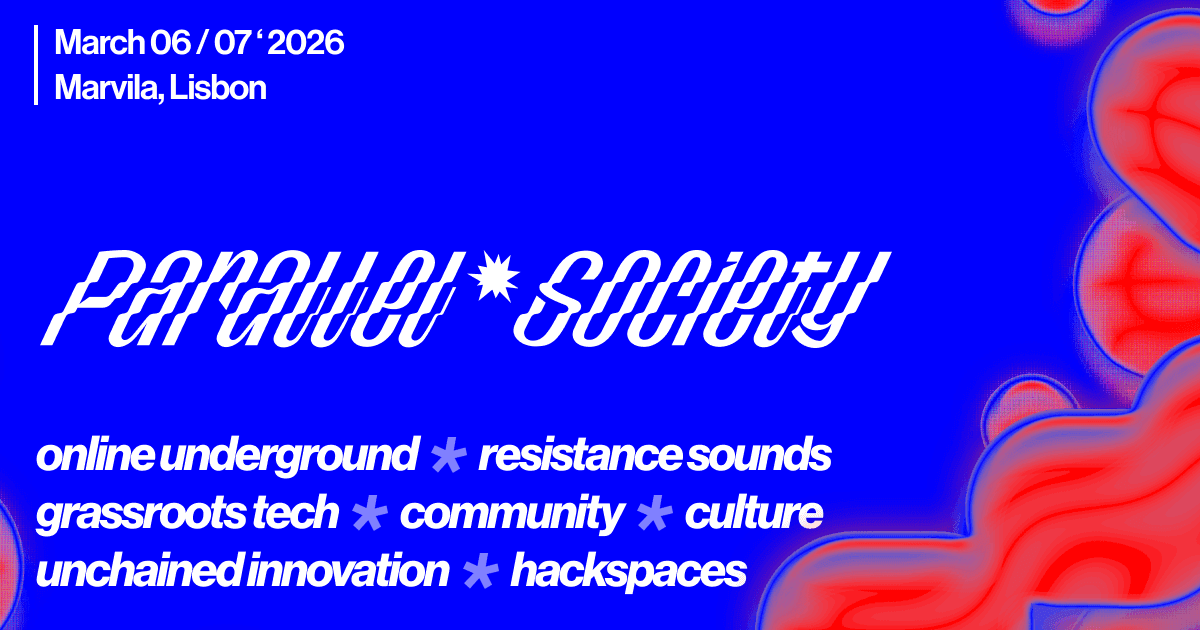
Taking place in Lisbon on 6 and 7 March 2026, Parallel Society is the flagship event for Logos. Tickets for Parallel Society day 1, the [un]conference, and day 2, the cultural festival, are now on sale. Get yours here.
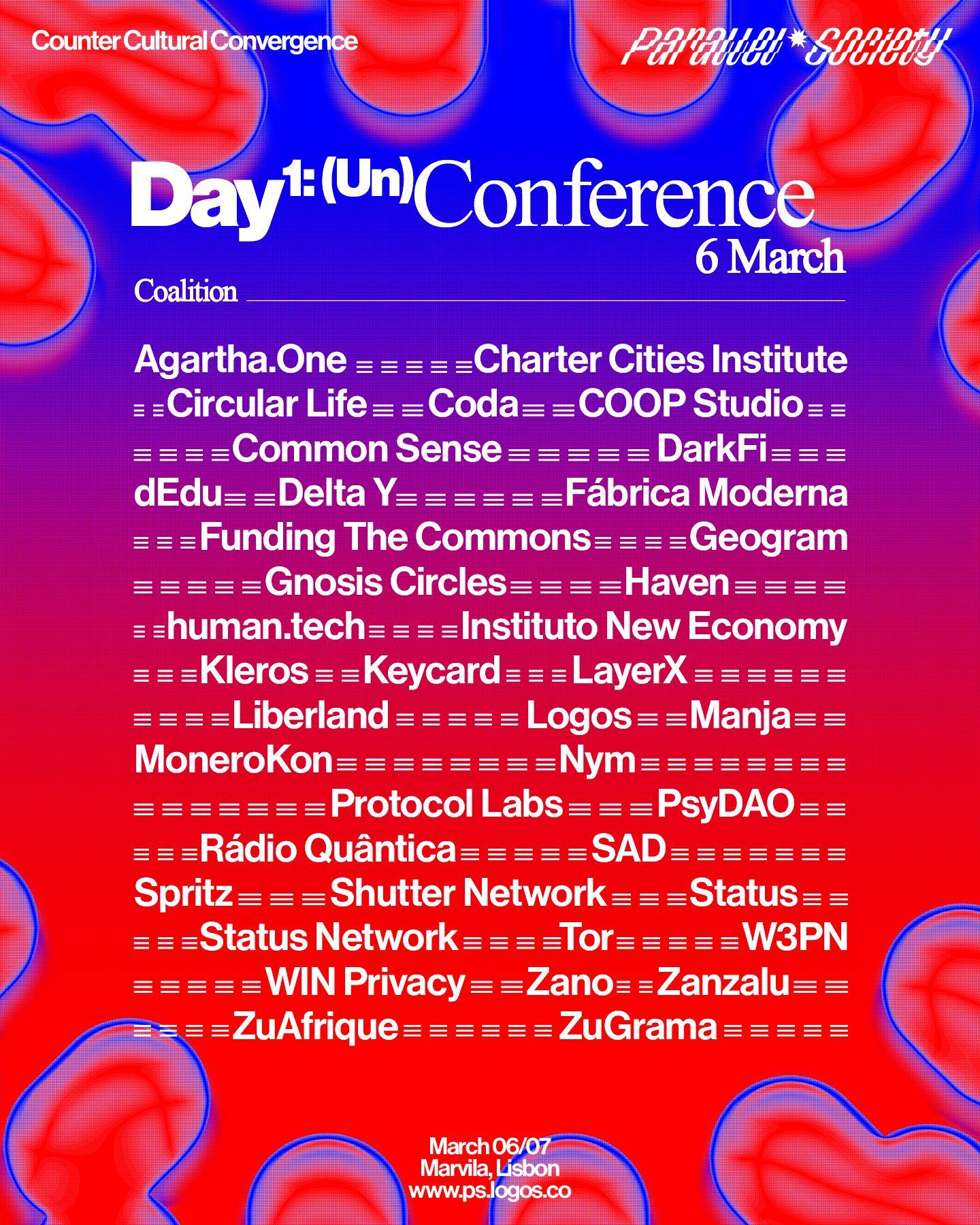
Day 1, the [un]conference, is all about participation, building together, and sharing ideas. The industrial space in Marvila, Lisbon, will be divided into zones, each reflecting a touchpoint of the Logos mission: FOSS, Decentralisation, Privacy, Community, and Culture.
The day’s programming is the product of the Parallel Society coalition, a collective of aligned projects committed to exploring how decentralised technologies can provide the infrastructure layer for new forms of human organisation and cooperation.
In January, we welcomed a handful of new projects to the coalition. Thanks to Gnosis, Protocol Labs, DarkFi, Zano, W3PN, Unruly Capital, ZuAfrique, Liberland, Crescimento, Haven, Layer X Labs, TAIKAI, and the Institute for New Economic Thinking for their support. They join Tor Project, Funding the Commons, Kleros, PsyDAO, MoneroKon, Nym, Women in Web3PrivacyNow, Charter Cities Institute, Nimbus, Status, Urbe.eth, Zu-Grama, Agartha.One, and Zanzalu as coalition members.
We’re still looking for more coalition partners. If you’re part of a project with technical or philosophical overlap with Logos and want to help us put on an event like no other, please contact us.

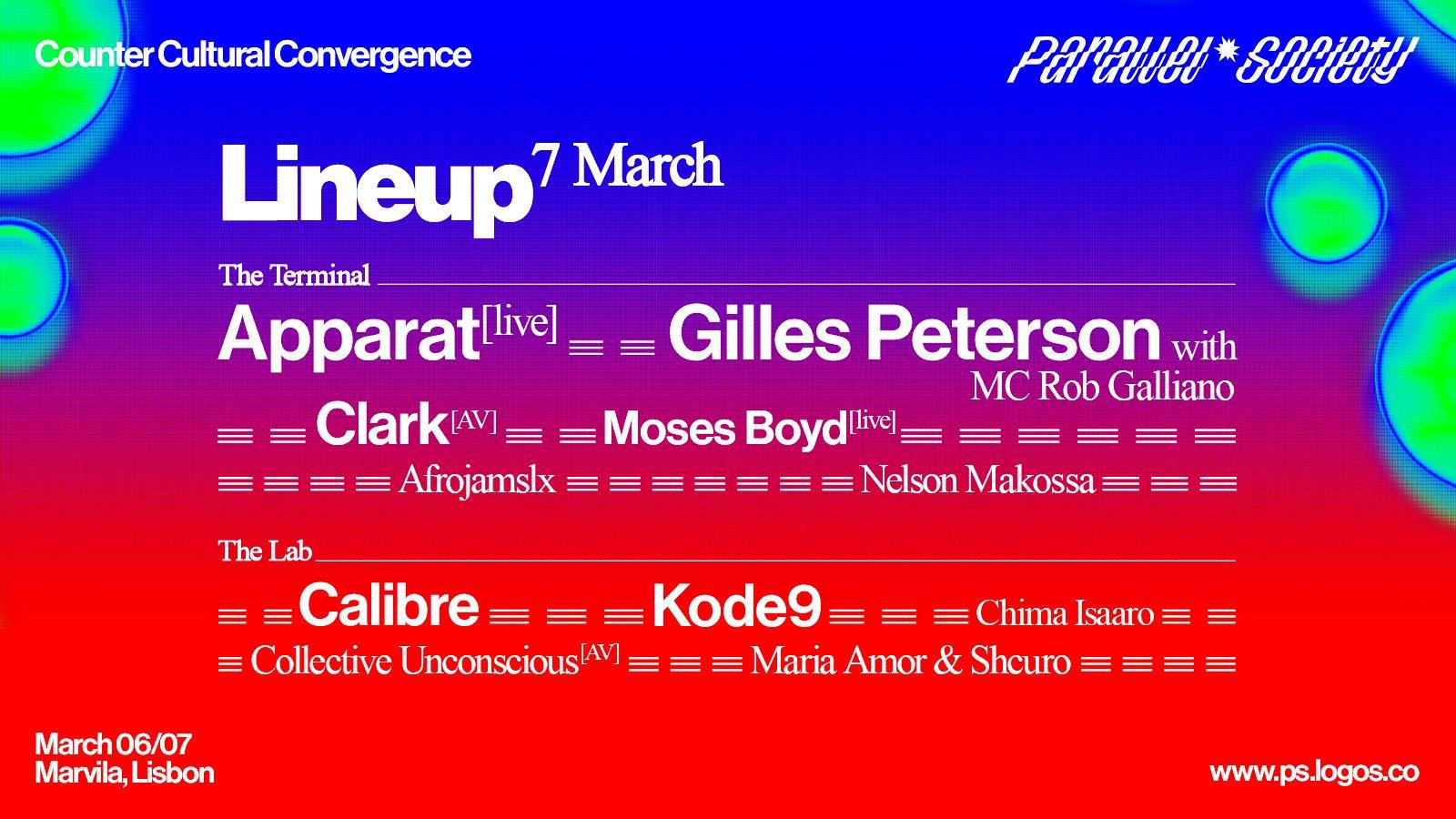
Day 2 unites an eclectic mix of creators to celebrate human culture, set to the soundtracks of Apparat, Moses Boyd, Calibre, Kode9, Chima Isaaro, Maria Amor & Shcuro, and others.
Additional acts will be revealed in the coming days, with over 15 more new music acts and virtual artists coming to the Day 2 lineup.

Logos Press Engine joins the party, too. We’ll have limited copies of Jarrad Hope and Peter Ludlow’s recent book, Farewell to Westphalia, for sale at a discounted rate. We’ll also have copies of the Logos zine to distribute.
If you’ll be at Parallel Society, come over, grab some literature, and discuss the future of human cooperation with us.
Parallel Society is a collectively curated experiment in parallel organising. If you have ideas for programme elements or just want to help out on the days, reach out here.
Secure your tickets or learn more about Parallel Society.
Logos Broadcast Network hits the airwaves

Logos regularly streams technical and philosophical content. But so far, the content has been fragmented and ad hoc, making it difficult to know what was coming up.
We’ve now consolidated our audio-visual output as the Logos Broadcast Network. It provides regular updates from Logos programmes like Circles, the Dev Club (where Logos engineers demonstrate and discuss their work on the Logos stack), research calls from the cutting edge of distributed systems, philosophical deep dives, tech and movement updates, and more.
Last month, DarkFi’s Amir Taaki joined our regular X Spaces to talk lunarpunk philosophy, and Sodai Network’s Simon Brown came on to discuss organising in parallel with the state. We also hosted a conversation on digital nomadism with long-time Logos community member Jaded Mandarin and one on the mainstreaming of privacy tech.
Follow Logos on X to get involved with these regular discussions.
On the technical front, Logos Dev Club spoke with the developer of Spritz, a decentralised social platform built on the Logos tech stack. We also hosted a research call in which Logos engineers discussed anonymity in decentralised file sharing.
Follow Logos Tech on X to take part in these technical deep dives and demonstrations.
Logos Circle: Online continues to meet every week. If you’re interested in the Circles initiative, the online Circle is a great place to discuss starting up a Logos Circle and learn from others already making change in their local communities.
Logos Circle: Online takes place every Tuesday on the Logos X account.
Logos Broadcast Network has lots more content in the pipeline for February. Check out the new calendar to see what’s coming up.
Logos Press Engine steps up a gear
Thanks to a slew of submissions from Logos contributors and the wider community, Logos Press Engine was particularly active last month. Here are the LPE’s January publishing highlights:
- Logos Dev Update: What’s Next for the Technology Stack in 2026
- Story of the Network: From Cybernetics to Blockchain Communities
- The Bitcoin of Governance: Logos and the End of Westphalia
- The Anatomy of Exposure: How Blockchain Transactions Leak Information at Every Layer
- Building Freedom Without Gatekeepers
- The Importance of Proposer Anonymity
Community submissions fuel the Logos Press Engine. If you have something you want to write about, submit an article proposal, and we’ll work with you to get it out there.
Logos Circles
Circles are free-to-attend meetings around the world to identify and solve local problems with grassroots action and Logos tech. Logos community members form Circles in their hometowns and cities. These groups meet regularly and are hungry for new members.
Check the Logos events calendar to see if there’s a Circle in your area and propose a new one if there isn’t.

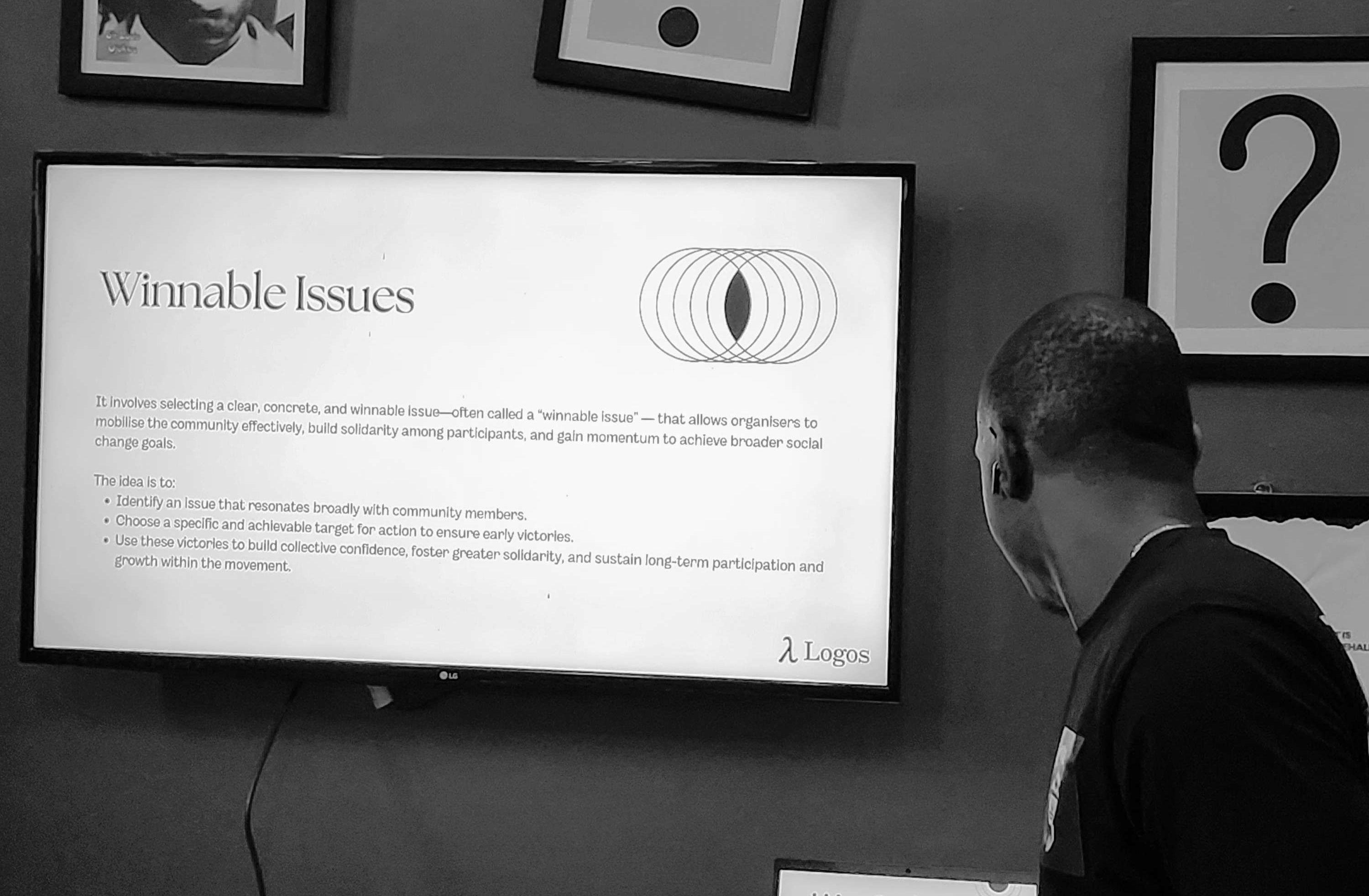
Big news for Logos Circle stewards: you’re invited to Parallel Society! Circle stewards will have the opportunity to discuss their work with Logos contributors and the wider community in Lisbon in March.
We hope this will lead the community to get involved in tackling winnable issues with Circles, even remotely. If Circle stewards need help with travel arrangements, please contact Amelia.
Learn more about Logos Circles.
Several Circles met in cities around the world and online in January:
- Abuja: First Circle. Explored voluntary governance, digital freedom, and decentralisation in a Nigerian context. Built early alignment with attendees and set the stage for continued engagement and contribution.
- Lisbon: Oriented the Circle toward Parallel Society preparation, including a potential volunteer day in Quinta do Mocho. Introduced an engagement ladder, identified prospective stewards, and aligned on next steps with local community partners.
- LA (workgroup): Clarified roles using the snowflake model and advanced the local coordination app by finalising core requirements. Next steps include continued app development and a February networking Circle meetup, followed by another work group.
- Boston: First Circle. Deep discussions around governance, finance, individuation, and collective coordination. Shared readings and references to ground future work, and aligned on the need to broaden participation.
- Porto: First Circle. Scoped the Digital Escape Egress MVP with survivor-safe privacy features. Planned a Parallel Society Festival activation to advance the #SafetyInNumbers campaign and broader EU-level action.
- Mexico City: Discussed potential winnable issues and reviewed EnDAOment, an onchain charity dapp that could be adapted for local civic use. Agreed to onboard members and select a first issue at the next meeting.
- Ruse: First Circle in Bulgaria. Discussed issues from Ruse’s low population growth to decentralised apps for opinion gathering. Established a Discord server for future collaboration.
- Enugu: First Circle. Introduced Logos and began identifying winnable issues, with early focus on digital literacy for students and privacy-preserving mental health support. Next steps include prioritising a pilot issue, forming partnerships with schools and NGOs, and moving into smaller working sessions.
- London: Continued digital ID focus. Explored whether the Circle should prototype a privacy-preserving ID use case locally, with next steps focused on further research and experimentation.
- Barcelona: Explored the privacy issues of Telegram, current topics and issues related to prosecution, journalism and activism in countries including Russia, Venezuela and Iran, as well as the role of private communication tools in spreading information without the interference of oppressive regimes.
- Morelia: High-level Circle aimed at introducing the concept of Logos Circles and finding Circle stewards for new cities. One promising steward emerged, and we’re looking forward to supporting their work.
- Online: Logos Circle: Online continues to meet weekly, providing a roundtable for Circle participants to share initiatives and learn more about the Logos mission. Get involved every Tuesday.
- Online (Español): First Circle. The first Spanish-language Logos Circle: Online happened on 4 February. The group aims to bring together Venezuelans working in web3 to collaborate on a remote winnable issue to support Venezuelans at home, and will meet every two weeks on the Logos X account.

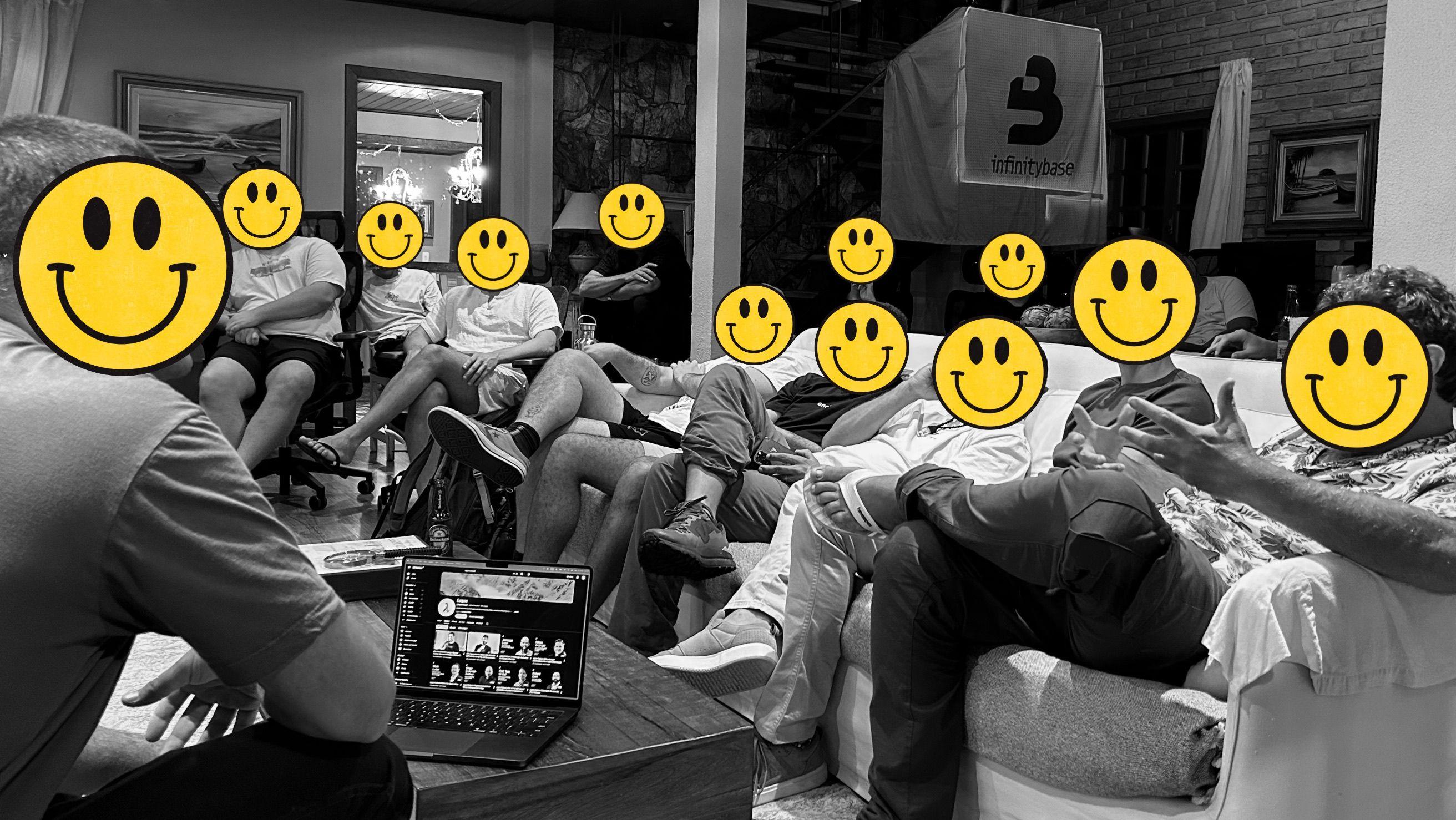
In February, Circles meet in:
- Brussels: Get involved.
- Lisbon: Get involved.
- Nairobi: Get involved.
- Ghana: Get involved.
- Ebonyi: Get involved.
- Benin: Get involved.
- Abuja: Get involved.
- Bangkok: Get involved.
- Porto: Get involved.
- Ruse: Get involved.
- Online: Get involved.
More February meetups are in the planning stage; be sure to check the Logos events calendar for new Circles popping up.
If there isn’t a Circle in your area, start one! Let us know your plans on the Contribute Portal.
Tech stack highlights
Development this month centred on building Logos Testnet v0.1, the first stage of the Logos Blockchain, with an emphasis on validating core backend infrastructure ahead of broader public use.
Another major focus of the past month was building Logos Core, which will integrate the blockchain, Logos Execution Zone, storage, and messaging. This early implementation focuses on technical capability rather than delivering a refined user or developer experience.
Good progress was made on developing module loading, packaging, and headless node operation for the Logos Core framework.
Storage reached an important milestone with the release of Logos Storage v0.3.0, narrowing its scope to file sharing and introducing a new high-performance datastore, while messaging delivered a first usable Chat SDK and early integrations into Logos Core. Blockchain work advanced on consensus and execution, and AnonComms worked on deploying the foundations of mixnet for privacy-preserving communications.
Further technical detail is covered in the full technical developer update on Logos Press Engine.
Coming soon: Logos Testnet v0.1
Logos Testnet v0.1 – the first release of the Logos stack, uniting private messaging, disintermediated storage, and privacy-preserving consensus – is coming very soon. This early testnet is experimental by design, built for those pioneers ready to explore, stress-test, and help shape what comes next.
If you’re a builder or experienced node operator with a taste for adventure, sign up for the upcoming node programme now.
January’s community champions
Just as human technologies are useless without humans to use them, Logos is nothing without its community. Each month, we shout out community members who build with us, spread our message, or support the movement in some other meaningful way.
Here’s January’s community champions:
- Privacymage for their work on the Parallel Society Spellbook, a novel project to adapt Farewell to Westphalia into the Agentprivacy universe.
- Jaded Mandarin for their thoughtful input on Logos X Spaces.
- Corey, Sterlin, JosiahWarren, and Severoni for supporting Logos Press Engine with submissions.
- Lou for everything she’s doing to make Parallel Society the most valuable gathering for attendees.
- All the Logos Circles stewards and attendees.
- Everyone who’s already bought a Parallel Society ticket.
- Anyone who has posted or talked to friends about Logos in January.
Blockchain-based governance is inevitable and starts from the ground up. We need developers, designers, writers, and all forward-thinkers to help us shape what comes next. Contribute to the movement today and help pave a brighter path forward for us all.
Discussion
Logos
Logos
Jarrad Hope
Logos
Logos
Logos
Logos
Logos
Logos
Logos
Logos
Logos
Logos