State of the Logos Network: 2025 Recap
Your roundup of the last 12 months for the Logos movement
Logos
Consolidation as Logos
Our movement’s biggest development last year was the unification of Logos technologies under a single identity: Logos.
Revealed in November, the decision came on the back of community feedback: you told us our previous naming structure was hard to follow and fragmented attention. So, we changed it.
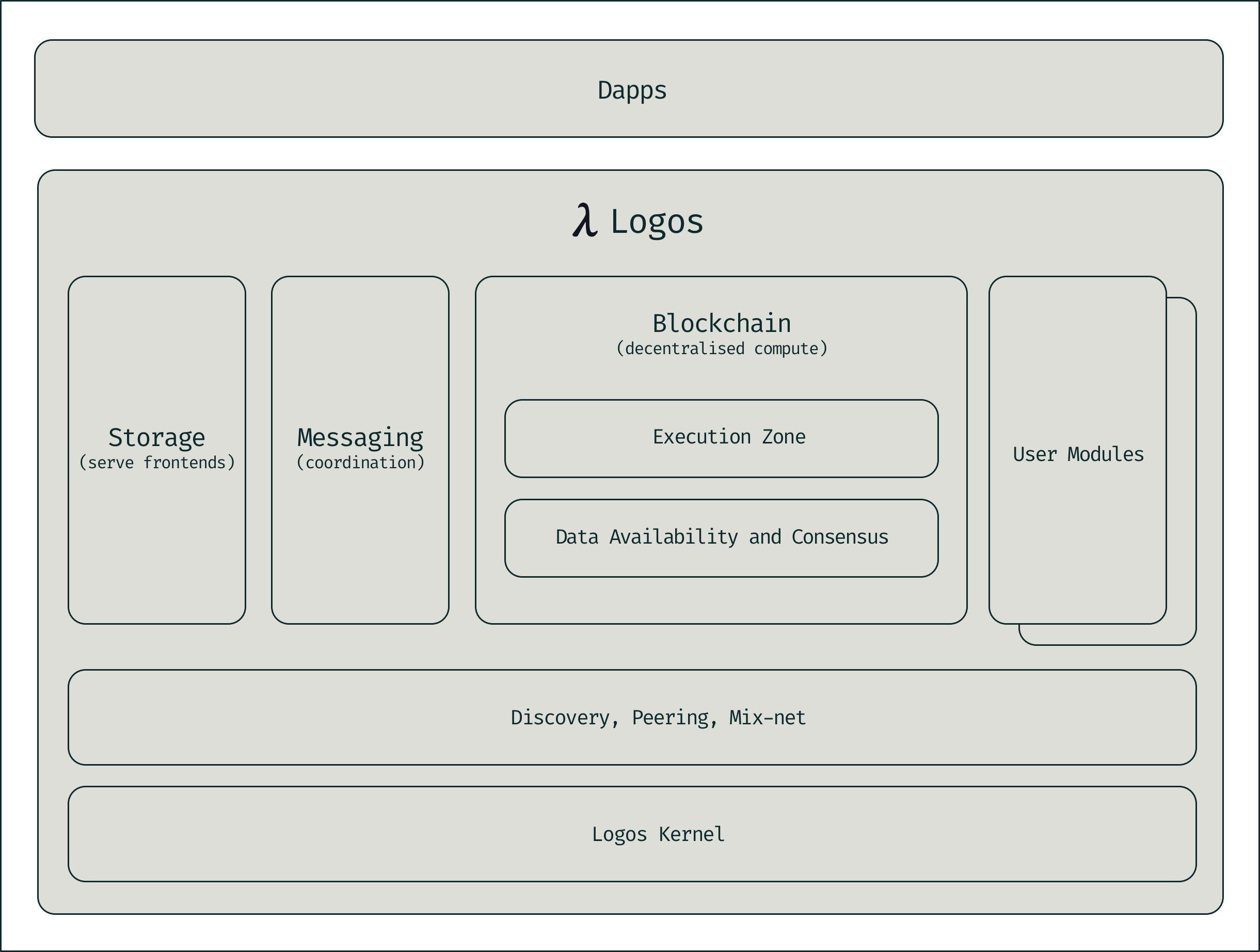
The unified stack consists of the following components:
- Blockchain (formerly Nomos):
- Messaging (formerly Waku).
- Storage (formerly Codex).
We’ve begun winding down the online presence of the above subbrands. Their social media accounts have been renamed and we'll no longer be pushing technical updates through them.
Instead, we’ll be using the unified Logos Tech account, which will also host various vibe coding and other developer-focused sessions going forward. Similarly, the individual protocol websites now redirect to the Logos homepage.
For updates regarding Logos’ social movement activities, we’ll continue to use the main Logos account.
New visual identity

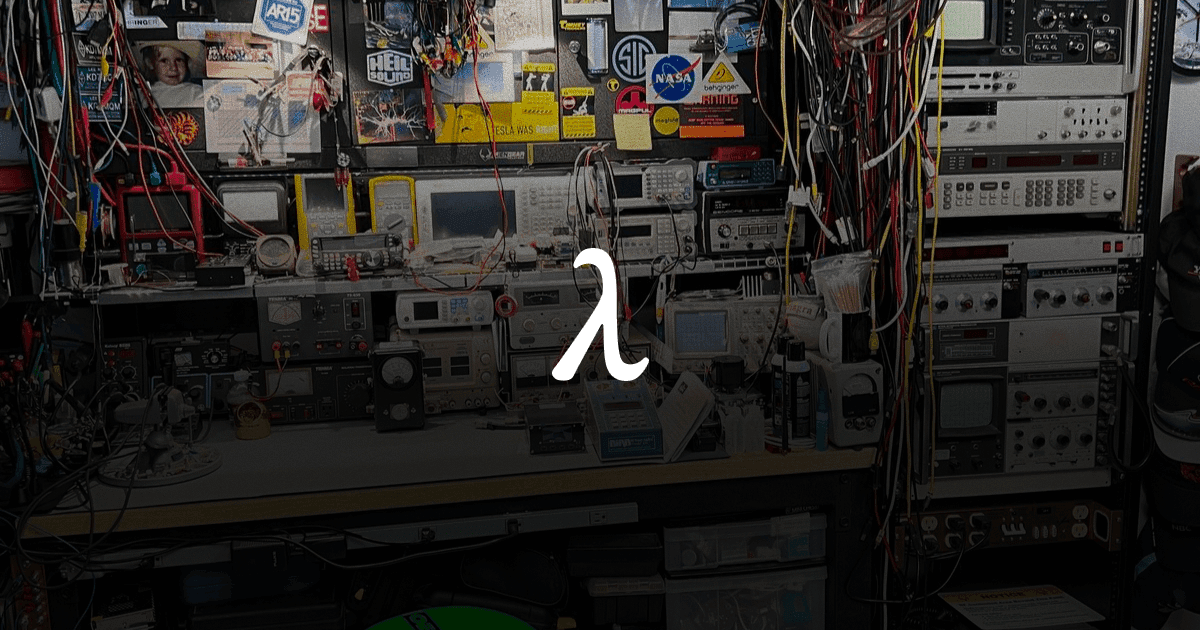
Along with the tech stack’s consolidation under a unified identity, we took the opportunity to update our movement’s visual identity. Our new design language is more open, inviting, and optimistic.
Logos is still highly aligned with the cypherpunk ideals that inspired our original look and feel. However, if we want our ideas and technologies to improve the lives of as many people as possible, we need to appeal to the broadest audience possible. Our new imagery enables us to do that.
You’ve probably already noticed our new logo, too. We chose the lambda character from the Greek alphabet because:
- It’s the Greek letter “L”, which is the first letter of “Logos”.
- It’s used to talk about logical thinking in philosophy.
- In computer science, it stands for functions that don’t have a name.
- It’s a Unicode symbol, so it can be used almost anywhere, like this: λ.
Check the changes on the Logos website, which also had a complete rework as part of November’s consolidation. Let us know what you think of our new look and feel on the Logos Forum.
Logos testnet and node programme
With a new, consolidated identity came another big announcement: the Logos testnet is coming in Q1 2026.
The testnet will be the first chance for developers to experiment with and build on Logos’ integrated technology framework. Ahead of its release, we’ve introduced a node programme to help those wanting to run hardware to strengthen the Logos network to get started.
You can expect more details about both the testnet and the node programme very soon. But if you’d like to operate a node at testnet launch, sign up for the programme today.
Logos Circles: Tackling local issues with Logos tech

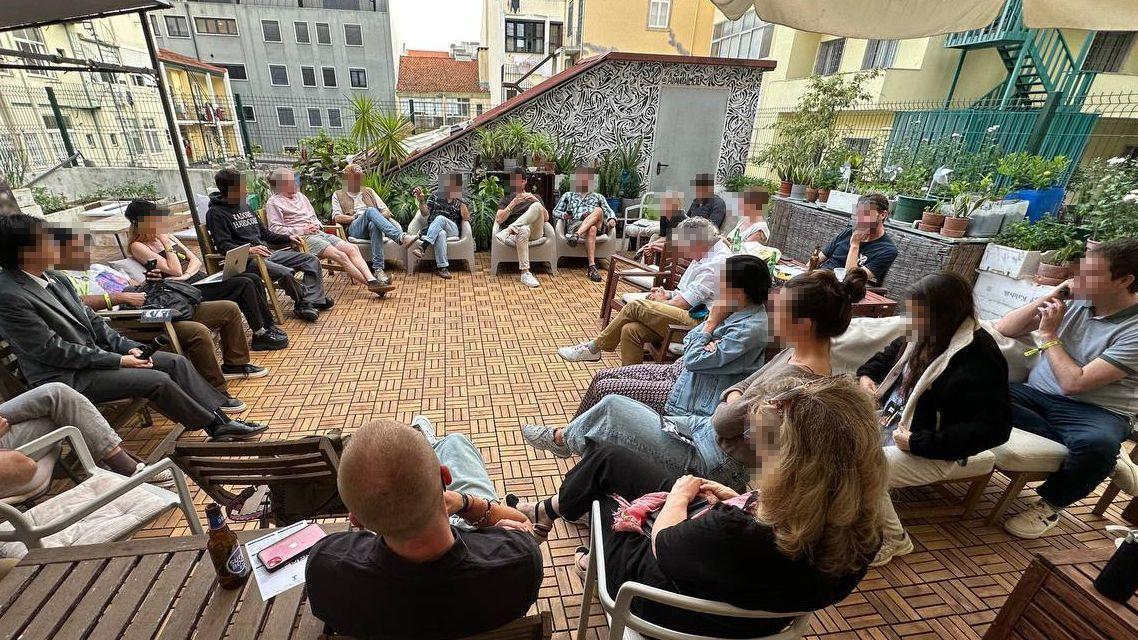
Last year, Logos began applying our ideas and technologies to real-world problems around the globe through the Logos Circles initiative. Across cities and continents, Circles have brought people together to focus on winnable issues: local problems that are concrete, achievable, and that improve the lives of real people.
Winnable issues are problems that are small enough to be solved but significant enough to matter. Rather than aiming immediately at large, abstract change, Circles focus on areas where a group of motivated people can realistically make a positive impact, building momentum through early, shared successes.
From zero local groups at the start of 2025, regular meetups are now happening in 23 cities around the world.
We’re actively looking for stewards to lead Logos Circles in new territories. If you want to lead a Logos Circle in your area, you can schedule a call with us to discuss your plans. We’ll support you with best practices, promotion, and guidance.
Circle wins in 2025
- Lisbon: Built a long-term partnership with the culturally rich but historically marginalised Quinta do Mocho neighbourhood, securing a community centre for youth workshops, organising winter clothing and gift drives, and producing a short film on community life and grassroots organising (premiering 6 March at Parallel Society).
- Zanzibar: Supported the Straight Training Center by launching a donations website, raising $2,000 for 10 Raspberry Pi computers, and helping secure $1,500 to cover another year of rent for the community-run school. Check it out and donate if you can spare a little.
- London: Laid the groundwork for a public knowledge hub on digital ID risks, including launching a coordination email group, engaging directly with policymakers at a House of Lords roundtable, and beginning a whitepaper to inform future government debates.
- Los Angeles: Advanced plans for a privacy-first neighbourhood engagement app (ZK Nextdoor), drafting core features and technical architecture and beginning work towards a prototype.
- Porto: Made progress towards Europe’s first digital escape and egress tools for domestic violence survivors, collaborating with privacy and safety partners, preparing MVP websites for field testing, and exploring sustainable fundraising options.
- Benin: Began work on FundBrave, a regenerative social-DeFi fundraising platform, with early organising underway to support community-led funding and local economic resilience.
- Online: Our Online Circles serve as a regular forum to share updates and initiatives between individual Circles. Hosted every Tuesday on the Logos X account, they’re a great way to learn more about and get involved with Circles.
Other Logos Circles are still in their early stages, meeting regularly and identifying the winnable issues they'll focus on.
Learn more about Logos Circles.

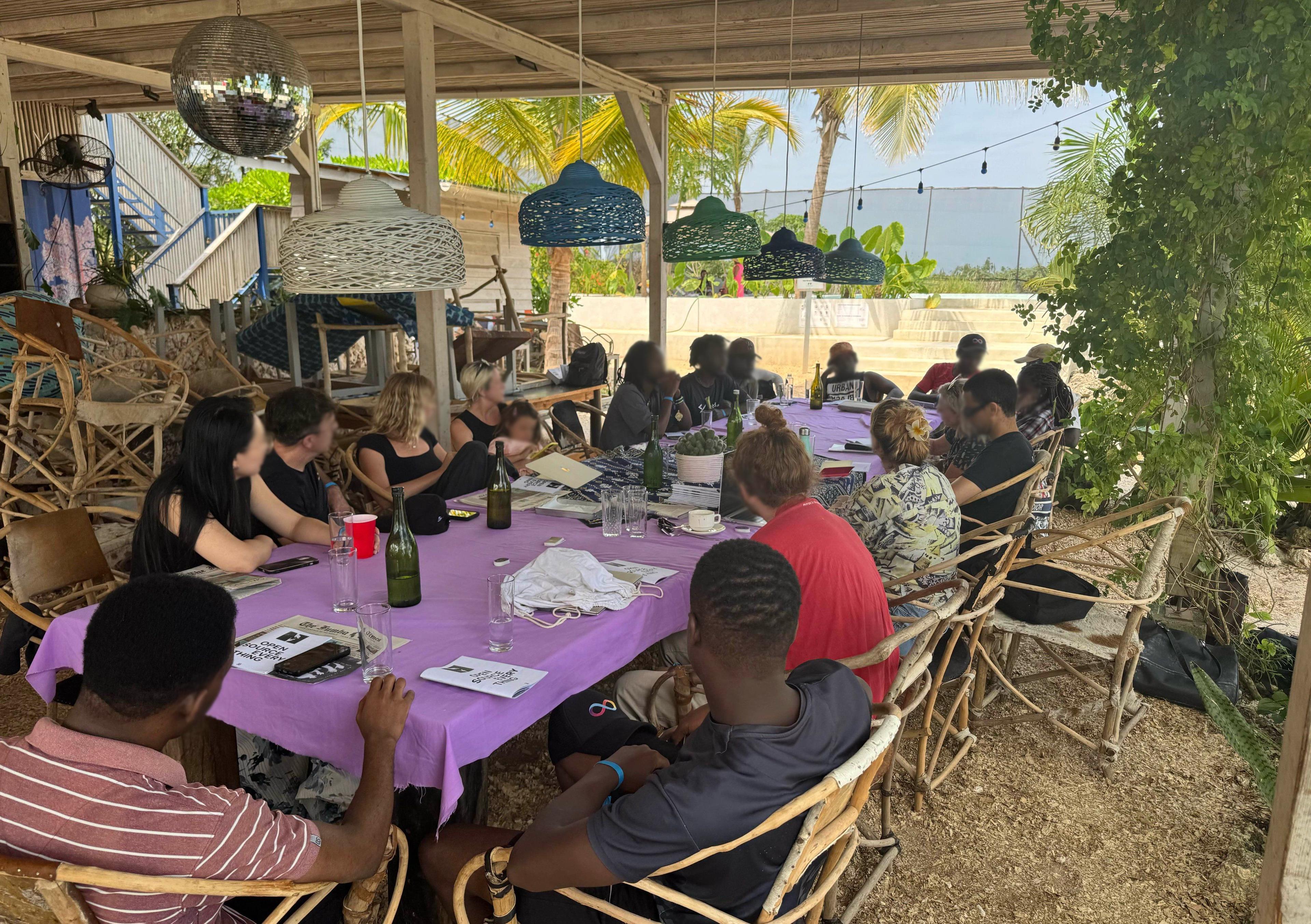
Privacy in Practice: Hacking for freedom and strengthening allegiances
In September, we launched Privacy in Practice, an ongoing, multi-part campaign to encourage the development of practical privacy-focused tools that address real-world needs. The initiative allowed us to work closely with organisations that share our mission to develop technical solutions to defend rights and freedoms.
RealFi Hack

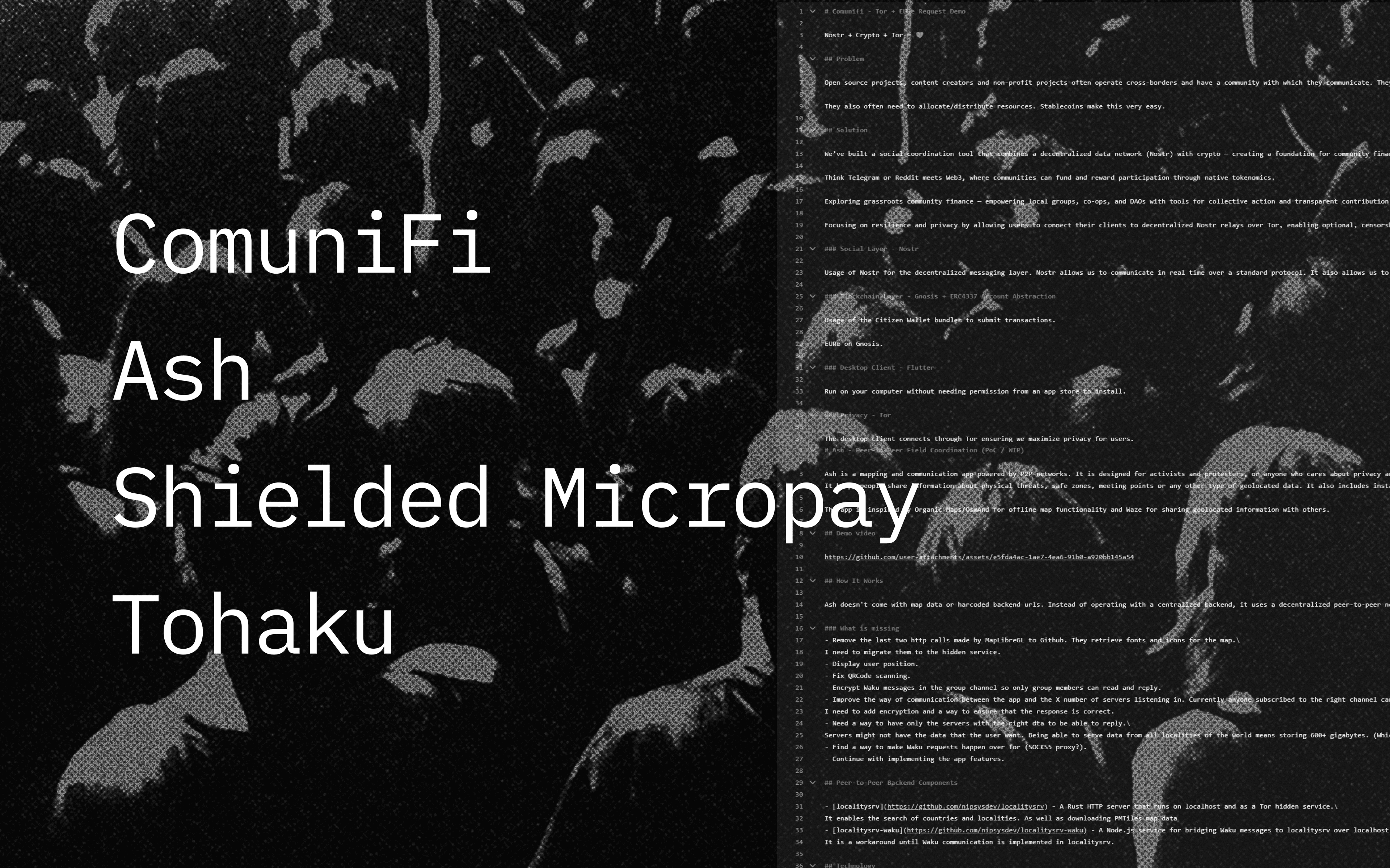
We kicked off Privacy in Practice by sponsoring RealFi Hack, a virtual hackathon running from 23 September to 16 October in collaboration with the Tor Project, Internet Archive, Funding the Commons, and other aligned organisations. Several standout projects emerged from the Logos-sponsored tracks, including:
- Ash: a peer-to-peer coordination tool for activists built on a decentralised messaging network.
- ComuniFi: a censorship-resistant communication and finance platform integrating messaging and onchain payments.
- Shielded Micropay: a privacy-preserving payment protocol for low-cost private transactions.
- Tohaku: a privacy-focused Ethereum wallet that routes interactions through Tor or mixnets to reduce surveillance risk.
Learn more about the RealFi Hack and the winning submissions.
Buenos Aires
Following the RealFi Hack, we took Privacy in Practice to Buenos Aires, the host city for this year’s Devconnect. Logos sponsored and participated in several initiatives designed to build connections, prototype tools, and foster collaboration around real-world privacy and public-goods infrastructure.
We supported and attended the Funding the Commons Builder Residency, which ran from 24 October to 14 November. Logos contributors mentored participants and collaborated on Keycard-adjacent projects ahead of the upcoming launch of Keycard Shell, a major new development in modular self-custodial crypto storage from the Institute of Free Technology.
Next, Logos supported and contributed to the Funding the Commons Conference, with talks, workshops, and interactive sessions, including a governance design workshop using Logos tooling. Logos further activated the Devconnect attendees by hosting the P2P Hacker Lounge, which featured demos, hacking sessions, and collaboration with aligned organisations.
These activities helped Privacy in Practice transition from virtual experimentation into real-world engagement, connecting builders from across the decentralised ecosystem and reinforcing Logos' commitment to advancing usable privacy technologies and public-oriented infrastructure.
Cultural highlights
Farewell to Westphalia

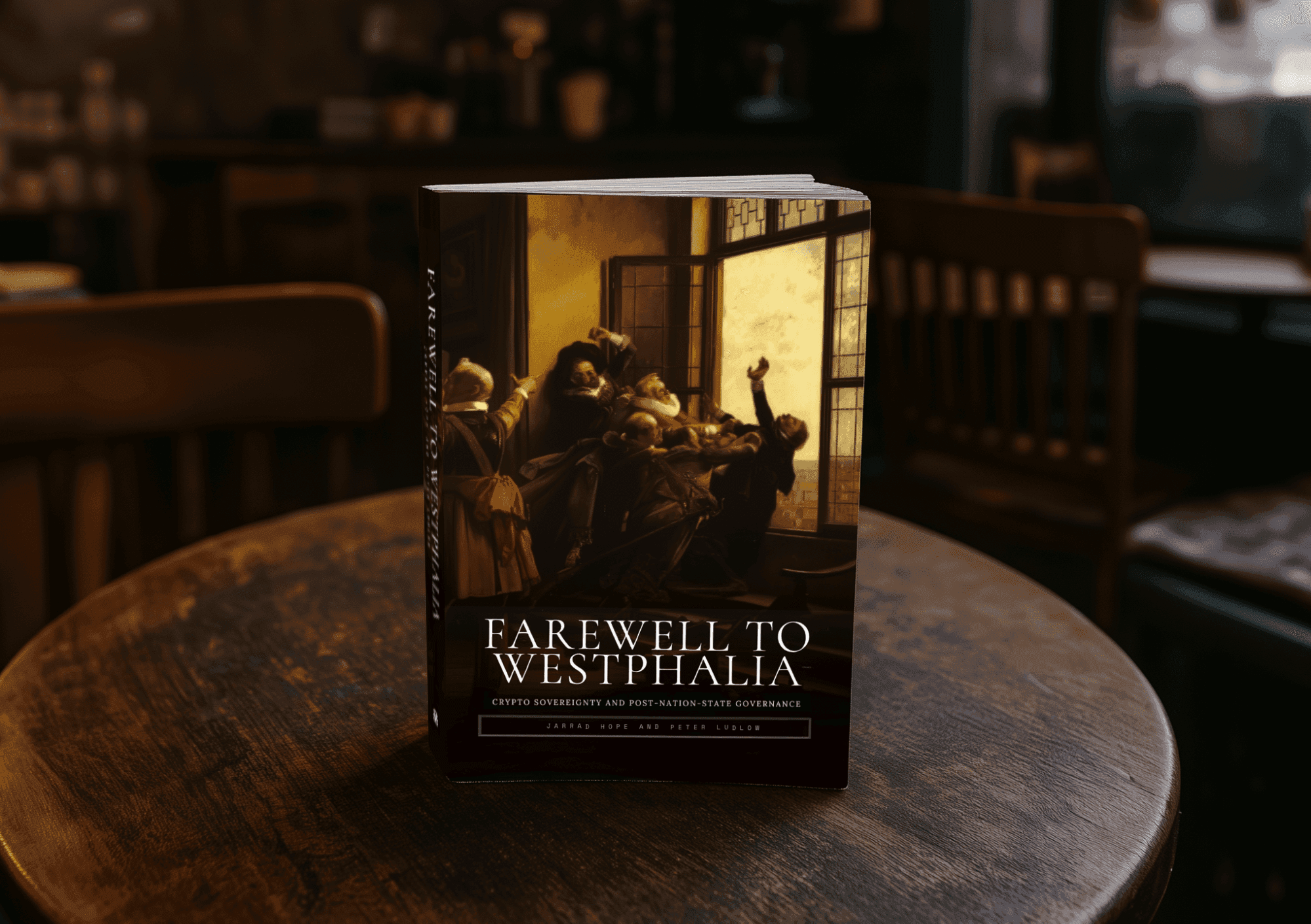
In September, Logos Press Engine published its first book. Farewell to Westphalia, by our co-founder Jarrad Hope and philosopher and internet scholar Peter Ludlow, offers a fascinating exploration of the nation-state model's failure to adapt to a digitally connected world and an alternative approach to human organisation supported by blockchain technology.
The book is now available in print, eBook, and open-source editions. Read Farewell to Westphalia today.
Parallel Society


Parallel Society is the culmination of the two sides of Logos: the technological and the human. The event, held in Lisbon, Portugal, on 6 and 7 March 2026, invites aligned organisations and individuals to join the Logos community for a celebration of cultures, ideas, and solutions.
At the heart of the Logos movement is the idea of parallel organising: i.e. taking action to solve local problems that have been overlooked or ignored by existing institutional bodies. Parallel Society is an opportunity to ideate, experiment, and forge connections with others who believe in the power of grassroots organising and technological solutions to improve real people’s lives.
Day1 is an [un]conference where technologists, activists, and visionaries converge to formulate and demonstrate novel modes of human organisation and cooperation. Expect workshops, hands-on demos, discussion circles, and more, with a strong emphasis on active over passive participation.
The day’s programming is the product of the Parallel Society coalition, which features Agartha.One, Charter Cities Institute, Funding the Commons, Kleros, Nym, and many other aligned groups. If you're part of an organisation that's interested in joining the coalition, reach out here.

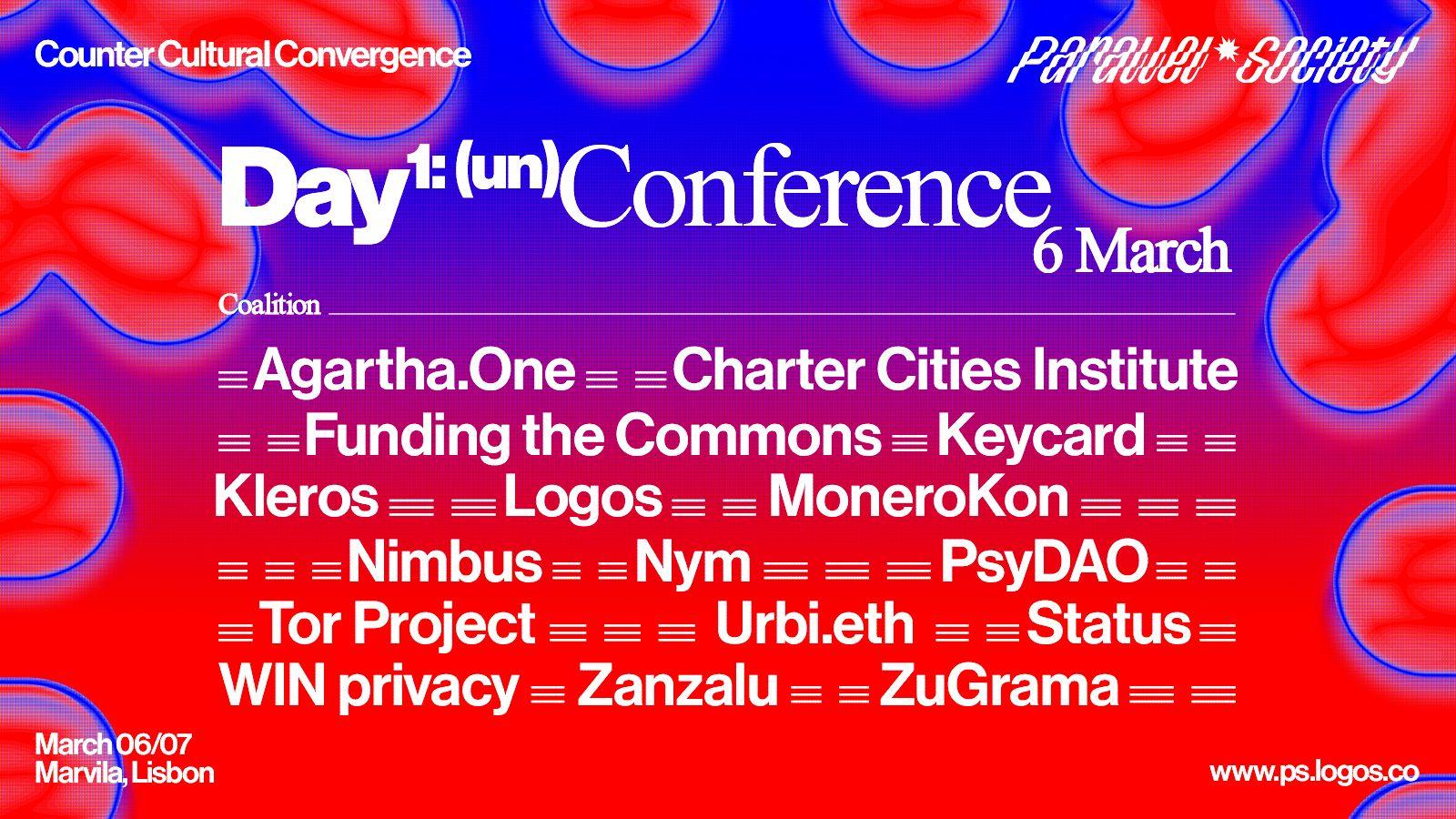
Day2 is a cultural convergence celebrating an eclectic mix of underground artists. Spread across multiple stages and made up of more than 60% Portuguese talent, the lineup features performances by Apparat, Gilles Peterson, Calibre, Kode9, Maria Amor & Shcuro, and many others from a variety of genres.

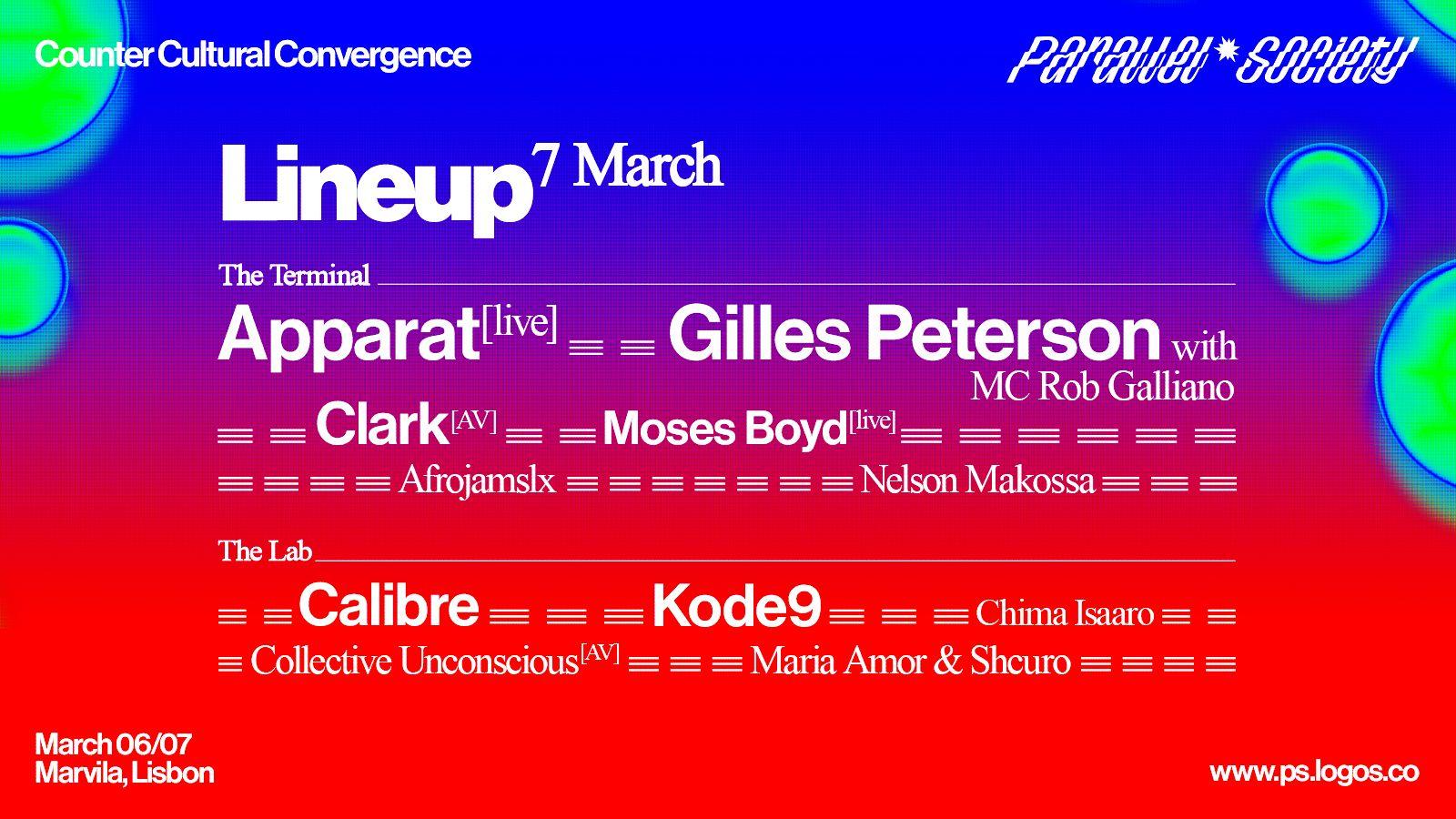
Parallel Society is a collectively curated experiment in parallel organising. If you have ideas for programme elements or just want to help out on the days, reach out here.
Secure your tickets or learn more about Parallel Society.
Road to Parallel Society
As part of the build-up to Parallel Society, Logos hosted Road to Parallel Society events in 2025.
- Zanzibar: Experiential pop-ups in Fumba Town, Zanzibar, featured live music, a marketplace, and collaborative sessions designed to blend local culture with global community building.
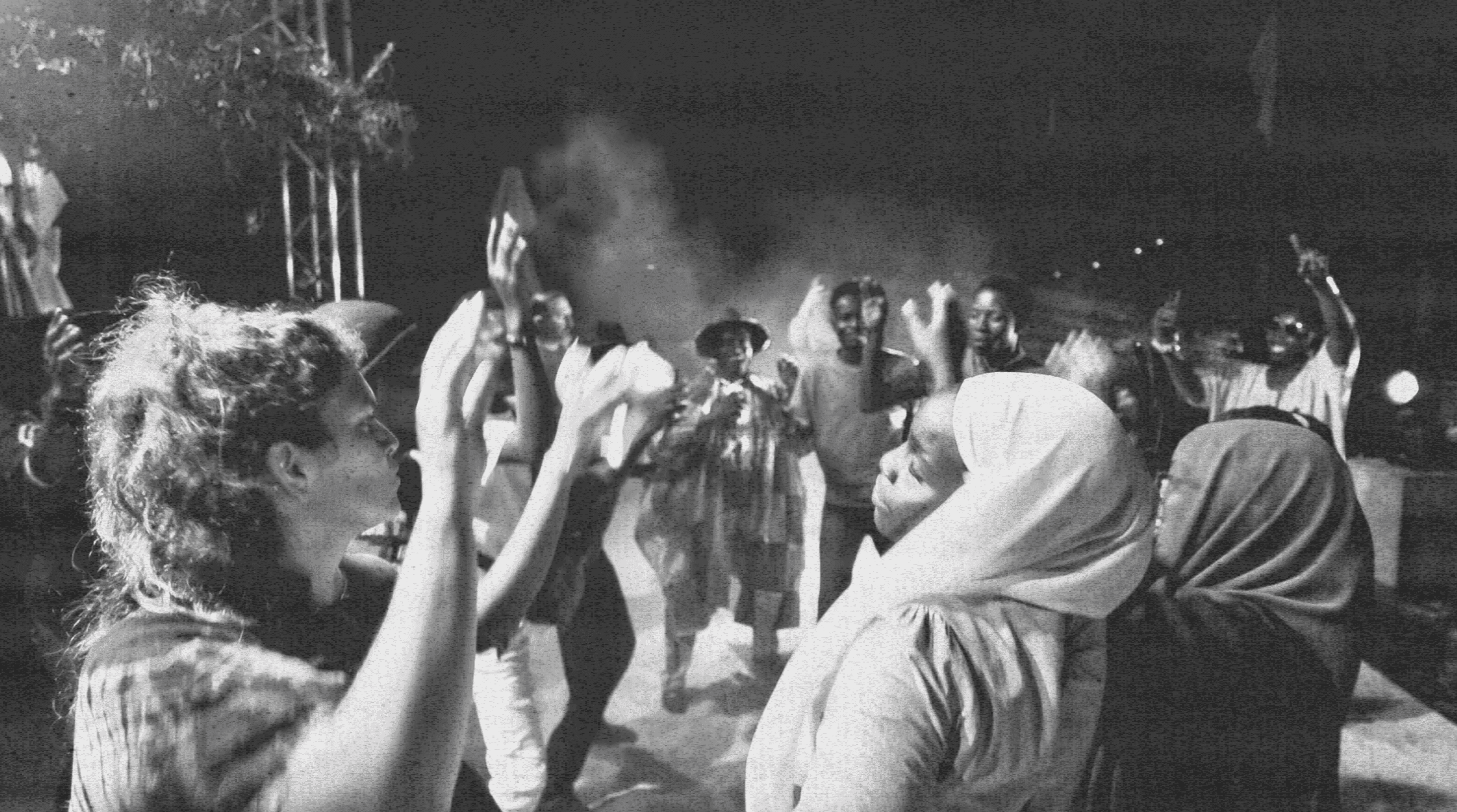
- Lisbon: We connected with the Quinta do Mocho neighbourhood to share the stories of community members via a documentary film, which is set to premiere at Parallel Society in March. Sponsorship of Rare Effect Lisbon gave a platform to discuss the initiative and Parallel Society generally.

Logos Spaces
Throughout the year, Logos hosted weekly X Spaces bringing together leading thinkers from the parallel society, alternative governance, and decentralised technology communities. These conversations became a regular place to explore how new forms of coordination, governance, and community can emerge outside legacy institutions.
Key themes included exit and jurisdictional choice, digital surveillance and privacy, decentralised finance, and post-nation-state organising. In one standout discussion, Jarrad Hope joined the Space to unpack the idea of “exit”, examining its limits as well as its potential, and exploring how access, exile, and power shape the real-world feasibility of opting out.
Another highlight was a lively debate between Balaji Srinivasan, Peter Ludlow, and Jarrad Hope on the nature of emerging political forms. While Balaji argued for the network state as a new organising model, Jarrad and Peter challenged the concept, favouring the idea of blockchain communities (as they discuss in Farewell to Westphalia) and questioning whether diplomatic recognition or state-like legitimacy is either necessary or desirable.
Privacy and resistance to surveillance were recurring threads throughout the year. Aaron Day joined twice to discuss how technocratic surveillance regimes operate and to share practical ways individuals can reclaim privacy online. Additional conversations with Michel Bauwens, Paul Puey, and contributors from DarkFi explored cosmolocalism, self-custody, wallet-level privacy, and the cultural and technical strategies needed to build resilient parallel systems.
Technical highlights
Following Logos' consolidation, development focused on aligning Logos into a single stack, optimised for builders, and preparing the launch of the public testnet (expected in early 2026).
A key outcome was Logos Core, a modular runtime that exposes messaging, storage, and blockchain functionality through composable modules rather than a monolithic client.
Messaging continued to mature through production use and protocol refinement. Storage paused its existing testnet while the protocol was reworked to deliver reliable node-side storage and retrieval aligned with the integrated stack. Blockchain development advanced on core foundations, including consensus, data availability, and the Logos State Separation Architecture (LSSA), ahead of the testnet launch later this year.
Further technical detail is covered in the full technical developer update on Logos Press Engine.

Celebrating community champions
Logos is passionately open source and the product of the people who believe in it. Last year, we doubled down on highlighting those who stepped up and went the extra mile to support our work. Here are some of the standout community members from the last 12 months:
- Xav for building out Ethos on Logos tech and contributing to the Logos Design System.
- JosiahWarren for their constant positive presence in the community and contributing to Logos Press Engine.
- Severoni for leading the Berlin Circle and contributing to Logos Press Engine.
- Vadym for their design support on the Keycard Shell web hub and the Logos zine web pages.
- Opde for their work on Secret Vault, creating fire memes, and being consistently active in the community.
- Vlady for creating audio soundtracks for Logos messaging and Logos storage.
- Václav for representing Logos at numerous conferences and supporting the movement in more ways than we can list here.
- Roxana for being active all over the Logos ecosystem and bringing great ideas and energy.
- Chair for leading Logos vibe coding sessions (more to come next year!)
- Luis for leading the San José Circle and their support for the Spanish-speaking Logos community.
- Lou for bringing together the brightest minds of our niche and a genre-bending lineup of live acts for this year’s Parallel Society.
- Adam Stallard for their Forum proposals for governance tooling using Logos tech. Check out Pacta, Aura, and Restate, and get involved in the discussions and development.
- All the Logos Circles stewards.
- Anyone who attended a Logos X Space or Circle (online or IRL).
- Anyone who has been inspired into action by Farewell to Westphalia.
Looking into 2026


Last year was the most pivotal to date for Logos. Our consolidation at the end of 2025 has given us a unified platform from which we can advance our mission, and the Circles initiative is already making a positive impact in communities around the world. Our simplified structure should help us to continue building our community with aligned passionate individuals who want to build and deploy technologies that improve real people's lives.
Major milestones to look out for in 2026 include:
- The testnet and node programme launch: We expect the first iteration of the testnet to be ready during the first quarter of this year and are looking forward to battletesting it with the community. Get involved and join the node programme now.
- Logos Circles: We’re pushing the Circles initiative hard in 2026 and expect to see many more groups form around the world. We can’t wait to see what they develop to tackle issues facing their local communities, with these ideas being forked and applied in other locations.
- Parallel Society: Happening in March in Lisbon, the lineup for the gathering is creating a lot of hype already. Get your tickets as soon as possible: you don’t want to miss it.
A movement like Logos is nothing without the support of a committed and passionate community. Thanks to everyone who contributed their time, effort, ideas, and enthusiasm over 2025; we hope you’ll bring your connections and do it all again with us this year.
Onward!
Logos is an open-source movement aiming to revitalise civil society. We need coders, writers, designers, and all forward thinkers to join us. To get involved, head to the Logos Contribute portal and submit a proposal.
Discussion
Logos
Logos
Logos
Logos
Logos
Logos
Logos
Logos
Logos
Logos